Translate

Showing posts with label Neon Genesis Evangelion Review. Show all posts

Monday, March 10, 2014

Neon Genesis Evangelion - A Psychoanalytical Trip (Final thoughts)

      This is the first time I've thought about one of these shows so deeply, it's quite a different feeling. I'm not entirely sure when the next time I'll do this will be, but it'll probably be a month or so down the road. Maybe..it's hard to tell. There are some shows I'm enjoying currently that are coming to an end soon like "Kill la Kill", "Space Dandy", "Nagi No Asukara", "Golden Time", and "Chuunibyou Demo Koi Ga Shitai! Ren". These shows are probably the only ones worth talking about, maybe not in such great detail as this, simply because they're not as deep of shows. Would just kinda be reviews or short summaries with my thoughts added in. They're still good, yeah, but there's something in shows like Evangelion that make you search inward and want to talk in great detail about them. "Steins;Gate", "Fooly Cooly", "NHK Ni Youkoso!" (Welcome to the NHK!) would, like Evangelion, be fantastic shows to talk deeply about in the future. But enough about the future! Let's finish up this analysis of Evangelion.

     We've talked about the setting, the theme, the 3 children whom the plot revolves around, and about the production and history. There are actually a ton of other characters we didn't talk about in this show who are actually pretty relevant to the plot, but it'd take far too long to talk about them all, so I decided to choose the 3 main ones, all of whom I could talk loads about. All the characters include, starting at the back, left to right:
     Ritsuko Akagi, Gendo Ikari, Yui Ikari, Kozo Fuyutsuki, Shigeru Aoba, Maya Ibuki, Makoto Hyuga, Ryoji Kaji, Misato Katsuragi, Kaworu Nagisa, Kensuke Aida, Asuka Langley Soryu, Rei Ayanami, Hikari Horaki, Toji Suzuhara, and finally: Shinji Ikari. Phew..really long cast of characters. Personally, I think the coolest part is that all the characters get a bit of air time and play, at least, a small chunk in the plot. Not many shows could do that and have it work as well as the Gainax team did. In fact, it works so well that even though all these characters are important to the show, it doesn't take away from the message or the main characters' developments. I'm not sure I've seen any show quite like this one.
     On my list containing the topics for this blog post, the next thing on here is "Places of great impact." Meaning places in the show that delivered "the chills" to me. I'm sure you guys have all had them, those chills that you get during a good scene in a show, listening to a good song, or something like that. One such "chill", and I've used these a lot during my posts, is the text-only frames mostly used during the final episodes.
Example of a text-only frame (ooo, dramatic!)
     These frames would often repeat over and over with a character responding. I'm not sure the exact term that would be used here, but it seems like a very unique way to conduct a monologue.
Shinji's response
     It forces the character to search within their self and give out answers that they may not have truly wanted to share yet. This type of monologue is gives a very powerful effect on the viewer especially, a feeling that is difficult to describe.
     Another type of frame shots were used in...2? I think 2 episodes. One in episode 4 and one in the late teens or early 20s. These are still frame shots where two characters are relatively near each other for a prolonged period of time (upwards of a minute or a minute and a half it feels).
"Tadaima" (I'm back) - Shinji
10 minutes pass
"Okaeri" (Welcome home) - Misato
     Are these long pauses really necessary? I found myself asking this question after having watched this very scene. I actually checked to see if my video stopped loading or if I was having internet troubles when this still-frame first began, but once I heard noises in the background, I realized it was just a really, really long pause. You don't ever see pauses like these in shows, it was pretty interesting and unique.
     So I've noticed something; it seems all these older shows (from 90s) share a pretty common plot explanation theme. They all tend to leave the viewer in the dark for most of the show (until around episode 20) then they suddenly bring in the plot explanation and everything makes so much sense. This show is no exception. I'm wondering exactly what changed, if it was societal, cultural, or just people complaining about lack of plot explanations that made the shows nowadays explain the plot more throughout, rather than a burst right at the end. I'm not saying I like it or dislike it, it's just different and makes me wonder about the change.
     In conclusion, if I were to rate this, I think I'd give it a 10/10. I'm not going to bullshit with the "but nothing is perfect!" mentality. This show is damn good. It's so damn good that I've spent 3 posts here (aka 3 weeks) talking about and analyzing it. If any show can do that for you, it deserves a 10, no questions asked. I think one of the few complaints about the show could be the ending, but even that for me was spectacular. Personally, I wasn't expecting anything in particular from the ending, so seeing something completely different from the action-packed 1st half was an incredibly cool experience. I know a lot of people who had issues with the TV show's ending wanted an action-y ending, so I could understand how some might be disappointed. However, the movies that have been released did indeed please both sides: the intellectual and the action. 
     The whole production of Neon Genesis Evangelion was a risk, not only due to the money issue, but also because of Hideaki needing to create an anime that was different from all the rest. Some might say it's these exact factors which acted as a catalyst for its success, some might say it's because of the people who produced it, some might say that it's because of some other reason. Whatever the reason, it's a great show, and I'm glad I could talk about my thoughts on it.
     Thanks for reading, everyone. I'll be back again next week with some more content.

Sunday, March 2, 2014

Neon Genesis Evangelion - A Psychoanalytical Trip (The Children)

     Hey everyone, pretty long post today. It ended up being much longer than I had anticipated, and I ended up talking about lots of the things I was going to talk about in the conclusion post, so the last post will probably be quite a bit shorter. It'll just be summarizing my final thoughts on the show. Enjoy~

The Children

Shinji Ikari (The 3rd child)
     Born one year after the 2nd impact; dubbed the "third child" meaning he is the third child to pilot an Evangelion (Eva-01 to be exact). The other two are Asuka Langley Soryu and Rei Ayanami whom pilot the Eva-02 and Eva-00 respectively. His parents are Gendo and Yui Ikari.
Gendo and Yui Ikari

     Raised as an only child, Shinji is abandoned by his father at an early age. Because of this, he faces extreme trauma which causes him to base his entire life around being useful to people, making everyone except himself happy.
Gendo leaves his son: Shinji Ikari
     He had no one to congratulate him or help him along for a good 11 years. I can imagine how that would probably make most people vie for some attention. Shinji, when the show begins, is asked to help out his father and thus put into the opportunity of his dreams. He also has the chance to become a hero in his generation: to save everyone from the Angels whom threaten humanity's very existence; as if being a hormonal teenager wasn't trouble enough.
     Shinji's personality throughout the show (up until the final scene) is very meek, submissive and quiet. He has a tough time coming to terms with himself, coming to terms with who he has grown to be since his father left him. Because of who he has become, he hates himself. As an Eva pilot he feels trapped that there isn't any other possibility for his life.
     This is a topic I have always felt very strongly about, feeling trapped in your current way of life. Ever since I was a kid, my parents had switched jobs (my dad especially) so I was constantly told that you're never tied down to your life, you never have to feel like you're trapped in your old ways. "If you pursue your passion" my parents would always say "the money will come eventually". I can't even begin to express how much those words formed my mind into what it is today. You see these people who spend 50-some years doing a job they hate - you hear about it all the time. They spend their time doing it because it's a stable job, consistent money. But one problem: they're not happy. They're content, yeah, but not happy. It seems like Shinji has fallen down the same path, despite this being a very futuristic/supernatural show, the concept still applies. Only occurring on the final scene does Shinji finally realize that there are more possibilities for his life than he ever had dreamed of.
Shinji is congratulated for finally recognizing that
he can change
He doesn't have to live this life, he can change.


Rei Ayanami (The 1st child)
     Rei Ayanami is a mystery throughout most of the show. She is already a part of Nerv when we see her in episode 1 and as a result we don't learn much about her until quite a bit later. She is the same age as Asuka and Shinji, whom all are in the same classroom during school hours. She is very quiet and reserved, much like Shinji, but somehow more so.
     Episode 25 brings up an interesting topic when Rei's monologue begins. She says she is scared of having no proof that her current self, that was shaped by the people around her, was alive after having died. There would be no proof in her own mind, and thus it would slowly disappear from others' minds. She doesn't want that to happen, so she becomes frightened of losing that which she has gained over the time in her current body. This sort of mindset seems pretty unique. The only example I can think of in our current world, would maybe be the military. You, as a soldier, are disposable. There are thousands of others waiting in reserves to replace you. Yet that doesn't mean your existence is pointless. I think the same should be said for Rei. Even if she does not like being used by Gendo, even if she doesn't like being disposable, it does not mean her existence is, all in all, pointless. There are the memories that remain in peoples' minds of who you were, or who you once were, that will stay there forever.
Rei's clones
     Later on in the show we figure out that the "original" Rei does not exist, she is merely a clone created by Gendo. Her entire existence is forced upon her. Never dying, always being reborn into a different clone...forever and ever, never being able to rest, never being able to get out of Gendo's grip — his control over her life. An eternal slave, basically. Rei's problems coincides with the other characters'; being her self-image and perception of her own worth as a human being. The fact that she knows she is disposable is a major catalyst as you could imagine. Even if she dies, she is always replaceable because of Gendo's cloning system. This begs the question "Does Rei have anybody to look up to?" A parent, teacher, anybody. A very plausible question. Having a mentor of some kind in your life can be extremely helpful at times when self-esteem is low among many other things. They're always there to talk you through situations and guide you when you need guiding. Rei seems to have nobody like that. At all. This seems like a huge problem to her psychological health, and it shows. She is very reserved, doesn't talk much to anybody and never truly lets herself express what she wants to express, aside from episode 25, where we delve into her mind. Not having any place to call home, not having anybody to tell about your day to. Seems like a lonely existence to me.This also explains why she is afraid of losing the only people (Shinji and Asuka) whom she has grown to enjoy the company of in recent times.

Asuka Langley Soryu (The 2nd child)
     Asuka Langley Soryu of Germany. Pilot of Evangelion-02. Fronting a spunky attitude, she commands her Eva as she does her life, brutal and offensive, in charge. The complete opposite of Shinji. We first meet Asuka along with Kaji Ryoji in episode 8. She seems to have an interesting relationship with Kaji, almost like a lover. However, Kaji is much much older than she and previously was involved with Katsuragi Misato a couple years back. Normalcy dwelling on the surface of Asuka, when we take a closer look, we see that more to her lies under the surface.
     Looking into her past, we stumble upon her family situation, much like Shinji, Asuka lost her family and had to look to other guardians to raise her. Her mother killed herself by suicide and her father remarried a German doctor whom she did not get along with very well.
What a complex
     Why is anybody easily irritable? Dissatisfaction, emotionally stressed, jealousy, being scared. All these things can contribute to being angry. Everything that makes Asuka, Asuka, is all external. Everything that makes everybody, everybody, is external. She is dissatisfied and jealous of Shinji, scared of not being able to pilot the Eva anymore. She expresses this through her harsh, loud words and strong demeanor. Nature versus nurture is a large aspect of psychology. From my understanding it's heavily debated if it's the environment that the child is raised in, or the people that they grow up around which makes each person unique and grow how they do. Some say it leans more one way, while others say it leans the other. I like to think of these characters in aspect of these terms. Is it really only the past that makes these characters who they are? Or is it simply who they are? But is a character really someone who has their own nature? I don't know, it's a very surreal subject when I think about it. The way the characters are developed though, seem to play a big part. Depending on who the person it is who developed such a character, the characters can have certain qualities about them that other developers could not create. If someone tries to push themselves to create a show like Evangelion, but doesn't have Hideaki's same background/nature, I believe it is impossible that they would be able to create the same show. It wouldn't be authentic if they tried. So what does creating characters like these in Evangelion really say about the producers of the show? What does it say about people in general? Is Hideaki scared of being alone? Jealous of his peers? Aren't these characters simply ways for people to project their own life into something mystical and magical? Personally, I think so. Writing is too, drawing is too, any creative self expression projects the creator's life onto it. There's that term: "self expression". Self expression is done in many ways, through body language, through words you say, words you don't say, how you carry yourself, your likes, dislikes, goals, aspirations, who you're jealous of. All of these things are forms of self expression, although we may not notice it at first. So as this show goes on, it follows the path of the creator's self expression, how they themselves change. How nothing is tied down, nothing is forever. You can, and will change.
     That's all for now, hope you guys enjoyed. I'll finish up the last post, which is expected to be a lot shorter. Laterrr.

Saturday, February 22, 2014

Neon Genesis Evangelion - A Psychoanalytical Trip (History/Setting/Theme)

Hello again, everyone. Hope you're doing well. I've been working on this on and off for the past week or so and I've got a lot of projects going as I'm sure you're aware (as well as some Starbow (an sc2 mod) to play) so the other parts might take a while to come out. But without further ado:

Neon Genesis Evangelion


     Neon Genesis Evangelion. What a show. Holy shit what a show. For those of you who haven't watched this show yet, please do so now, as there are going to be spoilers in the coming posts and major in depth analysis not only of the characters, but also of the ending episodes and those that lead up to it. THIS IS YOUR LAST WARNING: SPOILERS ARE CONTAINED HERE (and in the next few related posts).


Production and History of Evangelion

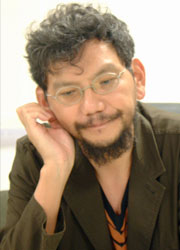
     Neon Genesis Evangelion: An anime classic. Created in 1994 by Gainax and written/directed by Hideaki Anno (Fun Fact: I later learned Hideaki was also the lead animator in Miyazaki's "NausicaƤ of the Valley of the Wind". Another movie that you should definitely watch. Fuck, just go watch all of Miyazaki's movies while you're at it, they're all classics).
Hideaki Anno
     NGE was created in the midst of an extremely poor time for the people at Gainax, who had barely any budget to create any anime at all. Hideaki wanted to create an anime "with a soul", and when talking with a representative of King Records, he was promised a time slot for "something, anything". There had been a previous anime that was in Hideaki's mind named "Aoki Uru", or "Blue Uru", which eventually failed, but it had an important theme that was kept when Hideaki began working on Evangelion. "Not running away" was this very aspect. Not running away from your fears, your own self, other people, the life you have, responsibilities. Hideaki wanted to include all of these into the anime he next created. Perhaps he drew this theme from his own life, from his so-called "depression period" which took its course over 4 long years before and during the creation of Evangelion. Many speculate this to be his reasoning for this anime's dark turn at the end, which, in my opinion, is probably true..however, there were also budgeting problems occurring in Gainax which resulted in an increased amount of still frames and less "animation" (think of the last 2 episodes).


Setting

Tokyo-3 on top
Geofront & Nerv HQ on bottom
     So we start off in the year 2015 in Tokyo-3, a fortified military city meant for defense against humanity's number one threat: Angels. Angels are huge, "beings" which come in various forms. One comes in the form of a human, one in the form of a 3-d diamond shape, one in the form of a huge spider, among many others. It varies quite a bit throughout the show.
The 9th Angel named "Matarael".
Its eye secretes acid that can melt through protective
layering in order to reach Nerv's headquarters
 The city defends itself against these beings by retracting its buildings back into the ground when Angels appear, and Evangelions ascend to the surface. These Evangelions are piloted all by 14 year old children whose mothers have died very soon after the Second Impact. Just for some background: The Second Impact is an event that happened in the year 2000 where a massive explosion happened in Antarctica, moving the Earth off its own axis thus creating very severe climate changes around the world. Each mother's soul is extracted out of the body and placed into each Evangelion where the mother's daughter or son will pilot it. This enables the daughter or son to have a strong synchronization rate with the Evangelion and thereby produce the best results in defeating the Angels.
Evangelion-01
Piloted by Shinji Ikari
 Up above you see the Geofront. This particular place houses Nerv's headquarters underneath the city of Tokyo-3. Solar panels line the waters at the top and provide natural lighting down below the surface. To my recollection, nothing at all is said about the Geofront in the show, so for the most part it's unimportant. However, a thought just came to me: it could be alluding to the theme of the show, which I guess I'll talk about a little bit here. The Geofront, placed underneath Tokyo-3 seems to symbolize that there is much, much more to what you observe with just your eyes. All you see is the surface of a person, not what goes through their mind or what lies beneath beneath the skin. The surface could be completely different from each person's unique Geofront, and nobody would know. Nobody is going to know unless you open it up for all to see and observe. And most people, from my experience, tend to cover this up as well as how they truly feel in order to avoid conflict. However, quite the opposite happens. What we're faced with in this show is an increasing amount of Angels forcing their way to the Geofront, trying to pry out some sort of understanding of why Nerv and the Human race is so defensive. Hideaki might be saying that even if we create all these barriers between our true feelings and other people's feelings, we just get more and more people trying to prod at us, and eventually they'll break through. This is one of the reasons why "The Human Instrumentality Project" is a thing in this show, which I'll talk more about down below.


Theme

Theme: the subject of a talk, a piece of writing, a person's thoughts, or an exhibition; a topic.
     Just in case anybody was unsure of what a "theme" exactly was, there it is. So you might be asking "what is the subject of Evangelion, exactly?" Well, let's take a look at what the show has to offer: we've got middle school students piloting robots which fight these monstrous beasts called Angels, a gigantic fortified city, deep seeded problems in each characters' psyche, along with some minor romance mixed in. Are all of these the themes of Evangelion? I'd say, yes, they definitely are. Near the end, really close near the end, we see all of these themes (yes, even the seemingly pointless romance) tie in together and creates this really remarkable, emotionally booming media. Evangelion touches on the term "separation anxiety" which is often seen in children (think of babies/children crying when parents leave them with a baby-sitter, or whatever) and some people who are afraid to be alone. Evangelion says "No, it's not just children and some people, but all of mankind who have this. We are social animals." and takes it one step further when Seele (the head corporation) initiates "The Human Instrumentality Project", which ends up being an extremely large part of the plot and conclusion.
Human Instrumentality Project begins
This Human Instrumentality Project addresses this very issue of human loneliness and separation anxiety. "What if there were no misunderstandings? What if there was just one "you" and not different perceptions of yourself in other peoples' minds? What if nobody ever felt loneliness?" These are just some of the issues that Evangelion begins to answer when draws near its end and ones that I'll be going over in the later blog posts.
Hope you enjoyed reading. Next time I'll be writing about the characters, their development throughout the show, and their creation by the people at Gainax. Probably some other stuff I'll spew onto the paper, too, but we'll see. See you next time.